
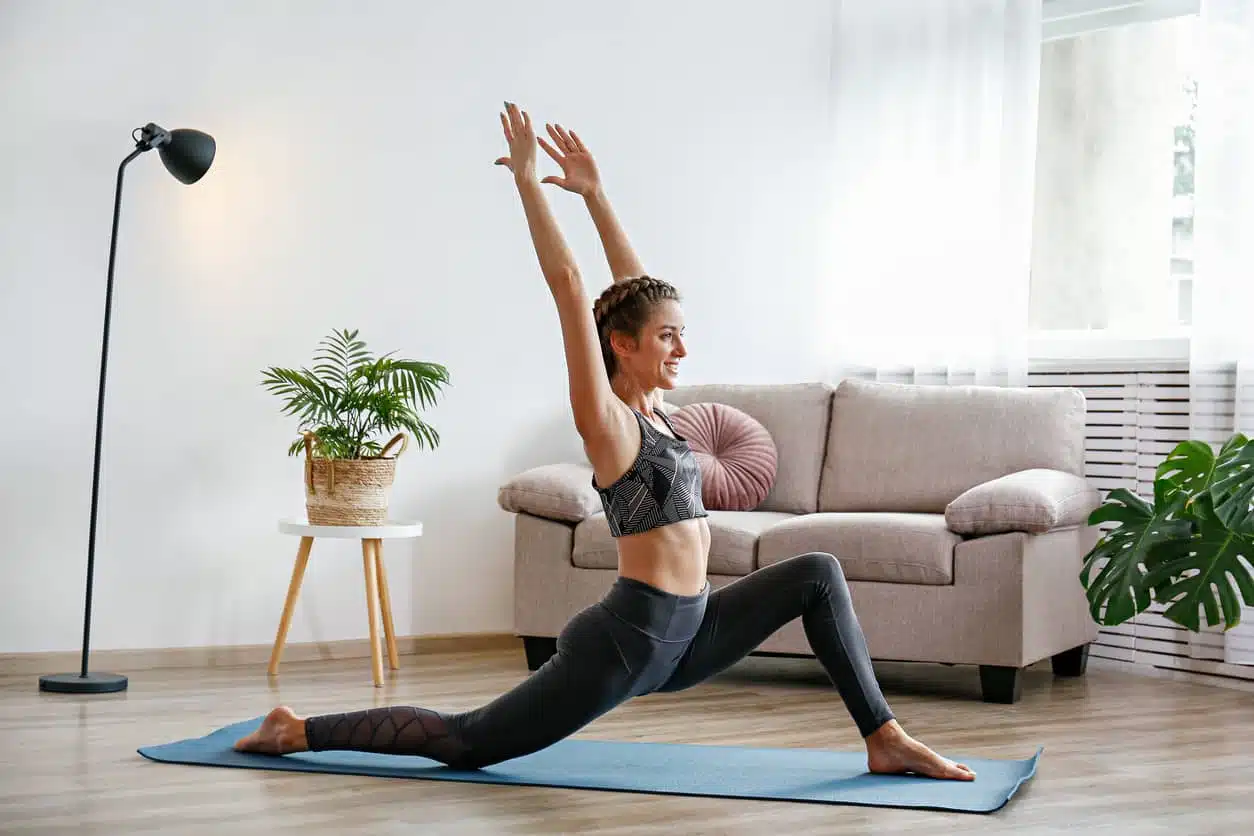
Yoga for Stress:-
Because yoga encourages relaxation, which is the natural antithesis of tension, it can aid in stress reduction. Our bodies, minds, and breathing—all of which are frequently impacted by stress—can all benefit from yoga. Doing yoga doesn’t have to wait till you’re anxious, and it shouldn’t this is called Yoga for Stress.
Stress
Lazarus and Folkman (1984) defined stress as an internal state which can be caused by physical demands on the body or by the environmental and social situations which are evaluated as potentially harmful, uncomfortable or exceeding our resources for coping.
Yoga’s popularity keeps rising as more people discover its mental and physical advantages. A frequent objective for those who wish to foster good growth and concentrate on self-improvement is to prevent and minimize stress, which can be achieved by starting a personal yoga practice.
Your yoga practice might incorporate breathing exercises, meditation, and relaxation methods like yoga nidra in addition to physical postures. To discover more about yoga’s ability to reduce stress and how you may utilize your practice to improve your wellbeing, keep reading.
How does yoga help alleviate stress and anxiety?
Yoga promotes physical and mental relaxation, which lessens anxiety and tension. The physical positions ease pain, ease tension, and increase flexibility.
You may be able to release stress and emotions by doing yoga positions that help you eliminate physical blocks like muscular knots. Additionally, they encourage the release of feel-good hormones called endorphins, which can improve your ability to cope with stress.
During your yoga practice, concentrating on the here and now helps you become more aware, concentrate better, and center your thoughts.
You could find it simpler to let go of attachments to neutral, negative, and good events as you grow more conscious of the fleeting nature of your thoughts, feelings, and body sensations. You might also discover how to foster emotions like joy, love, and peace.
What does the research say about yoga for stress?
Numerous scientific studies attest to yoga’s ability to reduce stress.
A 2018 study found that women who did Hatha yoga three times a week for four weeks experienced good effects from yoga. They saw notable decreases in anxiety, depression, and stress following 12 sessions (1Reliable Source).
These findings imply that yoga may reduce the need for prescription medications and serve as a supplemental therapy. Further research is necessary to examine yoga’s potential long-term benefits in treating anxiety, depression, and stress.
According to a small 2020 study conducted on adult males, yoga poses lower cortisol levels and improve parasympathetic nerve activity, which promotes relaxation (2Trusted Source).
In another 2020 study, researchers discovered that participants who practiced an 11-minute yoga nidra meditation for 30 days experienced a decrease in stress, an improvement in their general well-being, and an improvement in the quality of their sleep (3).
Additionally, yoga nidra practice increased mindfulness and decreased negative feelings. At a follow-up six weeks later, these advantages remained unchanged.
How to use yoga breathing to alleviate stress
Breathing techniques, called pranayama in Sanskrit, teach you to calm down, control your breathing, and take deep breaths. Your body and mind will feel less stressed as a result of this. Breathing exercises can also promote mindfulness and improve the quality of your sleep.
Breathing techniques can be included into your yoga practice or used as a daily relaxing technique. These methods also help you deal with challenging circumstances or uncomfortable feelings.
Some common forms of pranayama are as follows:
- breathing with alternating nostrils (nadi shodhana)
- The breath of fire (kapalabhati) is what Ujjayi is breathing.
- Simhasana, or “lion’s breath”
- Humming bee breath, or sitali breath (bhramari)
Yoga poses for stress relief
The following yoga poses can be used as a starting point to reduce stress.
Cat-Cow Pose (Marjaryasana to Bitilasana)
As you relax and let go of tension, this pose enables you to link your breathing to your movements. Every movement should be guided by your breath.
- Take a tabletop position to start.
- Put your knees beneath your hips and your wrists beneath your shoulders.
- Breathe in, arch your back, let your tummy come toward your mat, and look up at the ceiling. Cow Pose is this.
- Exhale by bending your spine toward the ceiling and pulling your chin in toward your chest in a cat position.
- For one minute, keep switching between these two positions.
Child’s Pose (Balasana)
Child’s position aids in energy restoration and internal focus. Additionally, it promotes both physical and mental relaxation.
Put a cushion behind your thighs, torso, or forehead for additional support.
- Place your knees together or slightly apart after you’ve been kneeling.
- Remain seated on your heels.
- With your forehead lying on your mat, fold forward, hingeing at the hips.
- Stretch your arms out in front of your body or next to your legs.
- Let your thighs fall into your torso.
- Take a deep breath and concentrate on letting your body relax.
- Hold this position for a maximum of five minutes.
Legs-Up-the-Wall Pose (Viparita Karani)
Legs-Up-the-Wall Pose increases circulation and lymph flow while promoting profound relaxation.
- With your body as close to the wall as you can, take a seat on the floor facing the wall.
- Place your legs straight up the wall while lying on your back.
- Place your hips a few inches from or adjacent to the wall.
- Put one hand on your chest and one on your belly, or lay your arms next to your body.
- Maintain this position for up to fifteen minutes.
Corpse Pose (Savasana)
As you relax and release tension in this pose, concentrate on taking deep breaths.
- With your feet a little wider than your hips, lie flat on your back.
- Give yourself permission to spread your toes apart.
- Place your arms at a 45-degree angle adjacent to your torso.
- Make sure your shoulders, head, and neck line up with your spine.
- As you let your body relax completely, take a deep breath.
- Hold this position for ten to twenty minutes.
Leave a Reply