
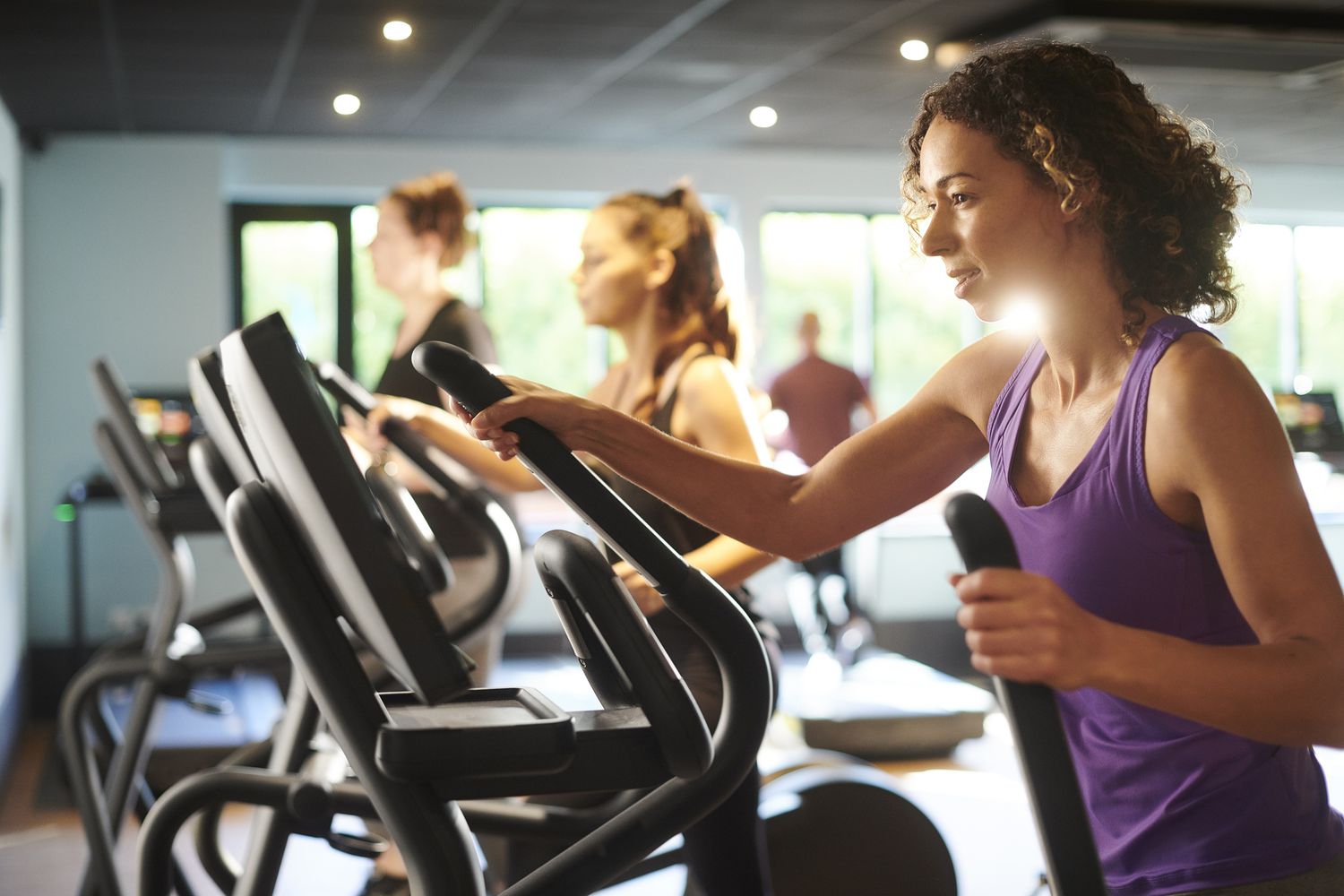
Treadmill vs. Elliptical Trainer:-
A treadmill makes more sense if you’re already a regular walker or runner or if you want to combine a higher impact activity with an exceptionally effective cardio workout. However, an elliptical will be a better choice if you want a lower-impact workout with greater control over your speed this is called Treadmill vs. Elliptical Trainer.

You might prefer to undertake your aerobic exercise indoors if the weather is bad or there is a lot of pollen. The two most common cardio equipment are the treadmill and the elliptical trainer, but it can be difficult to decide which one is ideal for you. This is particularly true if your knees are arthritic.
The elliptical trainer and treadmill both replicate a natural walking or running motion. A belt travels beneath you as you run or walk in place on a treadmill. When using an elliptical trainer, you place each foot on a platform and move in an oval motion. Both machines have advantages and disadvantages. Testing each equipment and observing how your body reacts is the best method to make a decision.
Exercise’s advantages for OA
About 27 million Americans suffer with osteoarthritis (OA) (Trusted Source). There is compelling evidence that moderate activity, such walking or elliptical training, offers several advantages for OA without exacerbating symptoms or accelerating the disease. Adults with OA can anticipate notable improvements in pain, physical function, quality of life, and mental health by participating in low-impact physical exercise for around 150 minutes per week, according to a report from the U.S. Office of Disease Prevention and Health Promotion Trusted Source.
According to a recent study, knee cartilage was significantly healthier in individuals who engaged in mild exercise more than three days a week for less than two hours each day than in those who did not exercise at all. Your arthritic knees can benefit from a low-impact aerobic exercise in the following ways:
- supplying nutrients and increasing blood flow to the cartilage to maintain its health.
- strengthening the muscles surrounding the knee, which lowers joint pressure and cartilage deterioration.
- encouraging weight loss, which lessens knee strain.
Treadmills: benefits and drawbacks
A treadmill may put greater strain on your knees than an elliptical trainer when you’re running or jogging. However, using an elliptical machine and walking on a treadmill both put roughly the same amount of strain on the knees. For novices, treadmills are typically easier to use and more user-friendly. Additionally, they might be more effective in increasing bone density.
When you’re ready to increase the intensity of your workout, issues may arise. You run the danger of placing extra strain on your knees when you speed up the treadmill, which could lead to more knee pain and irritation.
Safety advice
Ask a trainer or workout professional for help or a demonstration if you’ve never used a treadmill. Make sure you understand how to operate the controls, locate the on/off switch, and operate the emergency shut-off clip or key before you get on the machine. Wear shoes suitable for aerobic exercise and avoid stepping on or off the belt while it is in motion. Think about significantly increasing the grade if the treadmill has an inclination feature. According to research, a 3 percent slope gradient might lessen knee and leg shock by 24 percent. On the other hand, an inclination grade of more than 3% may have the opposite effect and put additional strain on the joints.
Pros and drawbacks of elliptical trainers
Using an elliptical machine is similar to mixing cross-country skiing with stair-stepping. Each foot rests on a platform and moves in an oval, or elliptical, motion as opposed to a normal walking motion where the heel of the foot repeatedly strikes the treadmill belt. You can up the intensity of your workout without putting more strain on your joints thanks to this zero-impact exercise. Certain elliptical machines have handles that move in tandem with the lower body. The arms, shoulders, and chest are worked out, and the body burns more calories as a result. You can also pedal in reverse on the majority of elliptical machines, which trains the lower leg muscles.
Elliptical trainers can be difficult to use and have a steeper learning curve for novices. Additionally, they don’t provide the same advantages for strengthening bones as treadmills.
Safety advice
It’s even more crucial to have a demonstration and become familiar with the settings before using an elliptical trainer because it might be more challenging to operate than a treadmill. You might want to steer clear of the moving arm handles at first if you’re new to elliptical trainers. The majority of machines have a set of more user-friendly stationary handles. Additionally, choose machines with broader foot platforms if you have the option. With the help of these devices, you may modify your posture to improve your balance and reduce joint strain.
The decision
For people with OA of the knee, both the treadmill and the elliptical trainer can be safe and efficient exercise options when used properly. One may work better for you than the other, depending on your particular requirements and level of expertise. The treadmill can be an easy way to safely exercise and support bone health if you’re new to exercise equipment or have a higher risk of osteoarthritis.
The elliptical machine can help you raise the intensity of your workouts as you advance through your program without putting more strain on your knees.
Leave a Reply