
Muscle Groups:-
Muscles are sometimes grouped together based on their location (e.g., your back, leg, or chest muscles) or the type of movement they do (e.g., abductors, flexors, or extensors). Typically, medical professionals only categorize muscles according to the kind of tissue they are composed of this is called Muscle Groups.
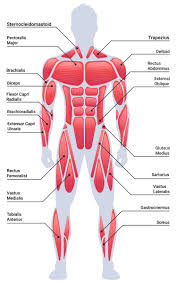
Antagonistic muscle:
Antagonistic muscle act opposite to the agonist muscle to bring about a muscle action.
Antagonistic and agonist muscle in pairs are called “antagonistic pairs”.
A strength training program can be created in any way you like. Nonetheless, you can increase the effectiveness of your workouts by combining specific muscle groups.
Combinations of exercises that enhance your strength, flexibility, endurance, and balance should be a part of any comprehensive training regimen.
Your blood glucose and lipid levels, as well as the health of your bones, muscles, and connective tissue, can all be enhanced by strength training. For optimum health, strength training should be done at least twice a week, according to the Physical Activity Guidelines for Americans Trusted Source.
Strength training programs can be organized in a variety of ways, but combining specific muscle groups could help you get the most out of each session.
To find out more about the best muscle group combinations and how to organize your weekly training routine, continue reading.
What are the different muscle groups?
Three categories exist. Reliable Source of the Body’s Muscles:
- Cardiac: These are the muscles in your heart that keep you alive.
- Smooth: These aid in the regulation of involuntary processes such blood vessel constriction.
- Skeletal: Your body uses these muscles to move, and you work on them in the gym. About 40% of your body weight is composed of these.
Skeletal muscles are frequently mentioned by fitness professionals when discussing the body’s main muscle groups and creating training regimens. These consist of:
- chest, back, arms, legs, shoulders, and abdomen
Additionally, these muscle groups are separated into more specialized muscle groups. For example:
- Legs: quadriceps (front of upper leg), hamstrings (back of upper leg), glutes (butt), and calves (lower leg)
- Arms: forearms (lower arm), triceps (back of upper arms), and biceps (front of upper arms)
The front, side, and posterior delts of the shoulder are called anterior, lateral, and posterior delts, respectively. - Back: latissimus dorsi (lats) (under the armpits), rhomboid major (upper back), and trapezius (traps)
What are the different exercise types? Compound vs. isolation exercises
While certain exercises can isolate particular muscles, many will engage at least two separate muscle groups simultaneously.
Compound exercises demand action in many joints or engage multiple muscle groups simultaneously. Squats, shoulder presses, deadlifts, and bench presses are examples of multi-joint exercises (MJE).
A more specialized muscle within a muscle group is the focus of isolation exercises, commonly referred to as single-joint exercises (SJE). Nonetheless, the movement may still be executed by a number of muscles cooperating.
One popular exercise to work the bicep muscles is the bicep curl. Your brachialis, located beneath your biceps, and the brachioradialis, a big muscle in your forearm, are two of the muscles that aid in elbow flexion. You can raise the weight more effectively with the assistance of additional stabilizer muscles in your shoulders and core.
A 2023 study’s authors point out that there is conflicting and wide-ranging data on whether MJE or SJE is superior for strength training. Likewise, there is conflicting information regarding the proper sequence for performing these workouts.
The ideal exercises for your workouts will vary depending on a number of factors, including your goals and body composition. Both kinds of exercises are frequently included in strength training regimens.
Which muscle groups to pair together: Beginners vs. advanced
There is a lot of conflicting research on how to categorize your muscles and plan your weekly workouts.
Recovery, which is essential for muscles, is a major consideration when choosing which muscles to combine together. After resistance exercise, it may take up to 48 hours for your muscles to fully heal, according to some research.
The frequency of your weekly strength-training sessions should also be taken into account.
Consider performing a full-body workout that emphasizes MJE to work all of your muscle groups if you resistance train twice a week. To keep your heart healthy, do cardiovascular exercises like walking, jogging, and cycling for 48 hours in between your full-body workouts.
You can be more specific about the muscles you train together if you do resistance training three or four days a week. This is frequently called a workout split.
Pairing adjacent muscle groups is beneficial for many people. Here are a few suggestions of how to divide up your weekly training sessions:
Examples for beginners
Here’s an illustration of how to use the six fundamental muscle groups we mentioned earlier to combine your muscles:
- Day 1: shoulders and chest
- Legs on Day Two
- Day 3: arms, back, and abdominals
- Day 4: relaxation
Example for advanced lifters
When creating your program, you might want to focus more on targeting particular muscles if you’ve been lifting for a while.
Here’s an illustration of how to use the more specific groups we described to combine muscle groups:
- Day 1: forearms, triceps, shoulders, and chest
- Day 2: quads, glutes, hamstrings, and calves
- Day 3: back, abdominals, traps, lats, and biceps
- Day 4: relaxation
Keep in mind that not every muscle group requires a different exercise. A complex exercise like the squat, for instance, employs your:
- quadriceps, hamstrings, glutes, and back abdominals
Leave a Reply