Emergency Room:-
The Indian Constitution addresses nation emergencies, state emergencies, and financial emergencies. Part XVIII of the Constitution specifies national emergencies in Article 352, state emergencies in Article 356, and financial emergencies in Article 360 this is called Emergency Room.
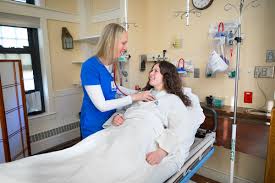
The Future of Emergency Medicine: Emergency Care without the Emergency Department
The Covid-19 pandemic offers an opportunity to rethink the role of emergency departments and emergency physicians, and to create new care options that remove traditional barriers to effective emergency care.
Before COVID-19, it seemed like a very long time ago.
When you watch “Lenox Hill,” a new documentary series on Netflix, you’ll be instantly taken back to 2018 and 2019, when the new coronavirus hadn’t yet taken over New York City and other areas.
The eight-episode series centers on four doctors, two of whom are pregnant. They captivate you with their love for patients and their ability to balance their demanding careers and lives outside of Lenox Hill, a hospital founded in 1857 to treat members of the immigrant population.
A bonus episode about the physicians treating patients during the COVID-19 outbreak in New York City this spring has been released to Netflix. Today, that episode became accessible.
Dr. Mirtha J. Macri, DO, an emergency department doctor who is expecting her second child any day now, was interviewed by Healthline last week.
We talked about what it was like to work at a New York City hospital during the COVID-19 outbreak, giving birth to her first child as part of the series, and treating an endless stream of patients while a camera was rolling.
How did it feel to be recorded while working at the emergency room, getting pregnant, and giving birth?
Dr. Mirtha Macri: To begin with, I had no idea what to do at first because I had never done something similar before. Fortunately, Ruthie (Shatz), one of the directors, was present during the entire filming process. There was a great deal of comfort. They made it seem as though the cameras had never been there. The cameras aren’t here and aren’t tracking me, so it was like a mental wall.
They were simply so covert. The cameraman resembled a ninja. He would simply appear whenever it was necessary. They would simply be present when I entered the room once the consent was completed in advance.
However, they would be in a very unobtrusive corner. I wouldn’t be able to see or hear them. As a result, I initially found it to be somewhat bizarre before gradually growing accustomed to it.
I would turn off the microphone and say, “Okay, I’m going to go do my thing,” whenever I needed a break. There were just two of them. It was good because it was the director and the camerapist. There weren’t many people asking me questions. In fact, it went more smoothly than I had anticipated.
Because the ER is so busy and there are nurses and other coworkers asking questions and chatting, I was initially a little concerned. However, as you saw the series, the mood seemed so serene.
To what extent did they follow you?
It was only specific days. Due to their tiny team size, they also had to follow surgeons (Drs. David Langer and John Boockvar) who perform lengthy procedures, as well as Dr. Amanda Little-Richardson. Women in labor are quite unpredictable, but they managed to make it work.
I was able to give them my schedule because I generally have it ready for the ER, and they would let me know the days and shifts they would be visiting. Before I had the baby, it would actually happen very frequently for a few months.
Did you hesitate to give birth on camera?
We really began filming a bit earlier in my pregnancy, and by the time she asked, I was completely at ease with (directors) Ruthie (Shatz) and Adi (Barash).
I felt that I wouldn’t be uncomfortable with this since I had previously seen how they were operating and how considerate they were of the patients, the staff, the physicians, and the area as a whole. And I wasn’t.
The experience was really wonderful since they were so considerate of the time and space, and if I needed a minute, they were willing to go outside, which never happened.
What made you decide to participate in the documentary?
They gave me an explanation of the concept and the vision, and I had the opportunity to view their work. I had some opportunity to sit down and observe the work they were doing in Israel. In Israel, a similar series was produced in a hospital using the same concept, following and filming doctors from various specialties in both their personal and professional lives.
In fact, I recently became enamored with the series. After that, I had a few film meetings with Ruthie and Adi, and I adored both them as individuals and their ideas and vision.
Do you believe the documentary succeeded in telling the story you were hoping it would?
I was hoping the documentary would shed some light on how our personal and professional lives are intertwined, and I believe it did.
Remember that the show only depicted a little portion of our working lives—the ER visit.
I wanted the show to depict the difficulties we face in our field, particularly in a city like New York City where we encounter a wide range of patients with a wide range of health issues, as well as the difficulties we encounter with health insurance, medical care, and a system that supports them.
Leave a Reply