
Benefits of Lunges:-
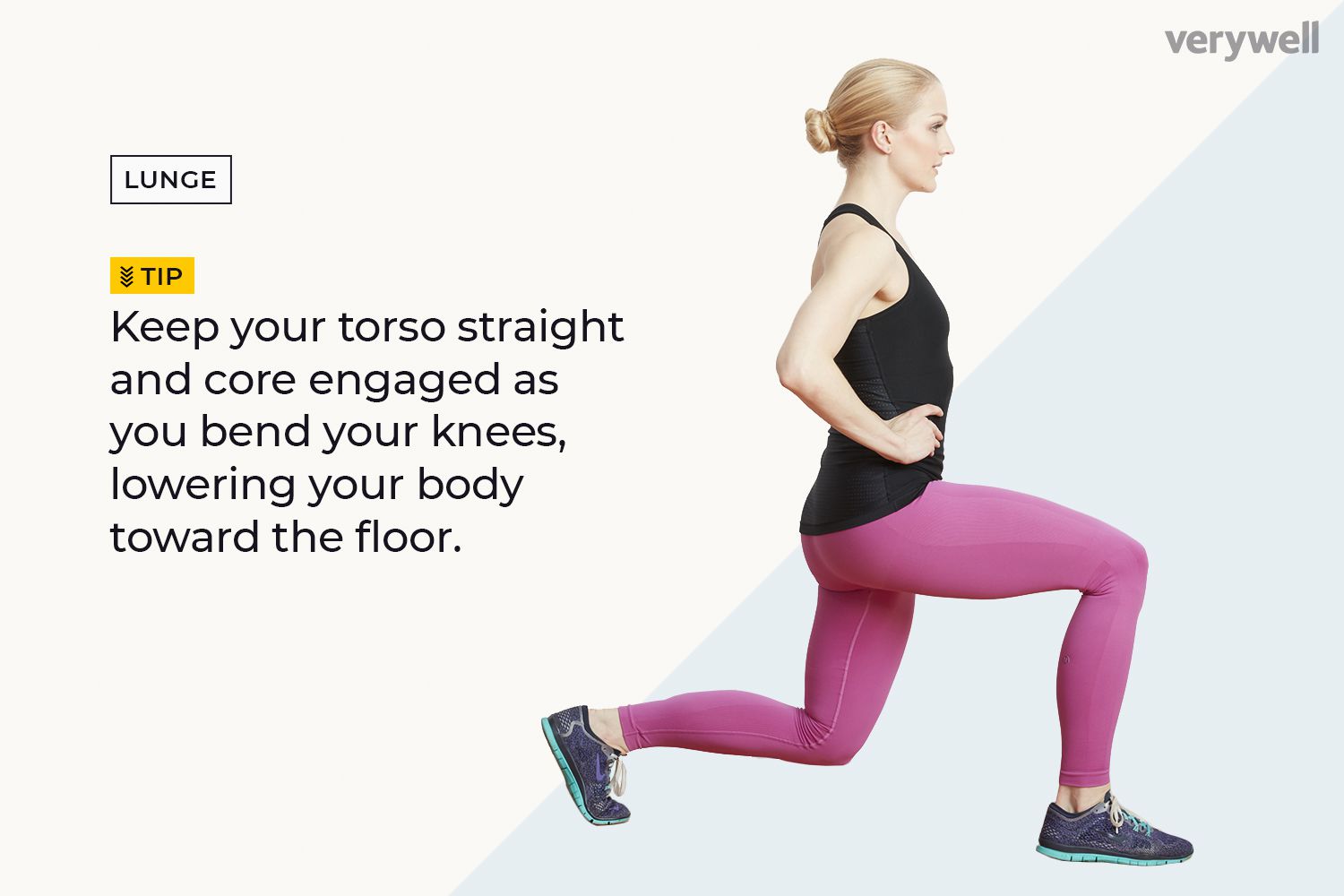
A lunge, which targets the glutes, quadriceps, and hamstrings while enhancing balance and functional movement, is a basic lower-body strength exercise in which you step forward, lower your hips until both knees are bent at about 90 degrees, with your front thigh parallel to the floor, and then push back up to the starting position. It’s a flexible, bodyweight-friendly exercise that strengthens the legs and core by simulating everyday movements like walking or climbing stairs this is called Benefits of Lunges.
One strength training exercise that can help you tone, sculpt, and strengthen your body is the lunge. Additionally, they can enhance sports performance and general fitness.
Resistance exercises like lunges are well-liked because they improve mobility and stability while strengthening your legs, hips, and back. Lunges are perfect for current athletes, such as cyclists and runners, as well as those who want to gain strength.
See the advantages of lunges, the muscles they target, and some variation choices by reading on.
Advantages of lunging
1. Losing weight
Lunges strengthen your lower body’s major muscle groups, increasing lean muscular mass and decreasing body fat. Your resting metabolism may rise as a result, enabling you to burn more calories and lose extra weight.
Include lunges in a high-intensity circuit training regimen with heavy weights to push yourself to the limit if you’re trying to lose weight.
2. Stability and equilibrium
Because you work on both sides of your body separately, lunges are a lower body unilateral exercise. Your stabilizing muscles are used in the single-leg exercises to improve stability, balance, and coordination.
Your body becomes less stable when you work one leg at a time, which makes it tougher for your core and spine to maintain balance.
3. Symmetry and alignment
For rehabilitation, lunges are preferable to bilateral exercises because they can make your body more symmetrical by correcting imbalances and misalignments.
To avoid overcompensating or overusing the dominant side, dedicate a little more time to working on the weaker or less flexible side.
4. Take a taller stance
Lunges help to improve your core and back muscles without overtaxing your spine. In addition to improving your posture and lowering your risk of injury, a strong, steady core facilitates everyday tasks.
Advantages according to lunge type
5. Lunges that are stationary
Lunges that are stationary work your hamstrings, quadriceps, and glutes. Your back leg will be used to balance, steady, and support your complete body while your front leg will bear the majority of your weight.
Since stationary lunges serve as the basis for all lunge variations, you’ll want to master the form.
6. Side lunges
Lateral lunges improve strength, stability, and balance. They work both the inside and outside of your thighs, and they might even lessen the look of cellulite.
In contrast to your body’s typical forward or twisting motions, side lunges teach your body to go side to side. Additionally, side lunges train your legs, hips, and quadriceps at a little different angle.
As you perform these lunges, focus on using the muscles on the outside of your legs.
7. Lunges while walking
Walking lunges need coordination and balance. The walking variation increases general stability by working your hips, glutes, and core. Additionally, they improve your functional everyday movements and expand your range of motion.
Use weights or a torso twist to increase the difficulty of walking lunges.
8. Lunges in reverse
Reverse lunges activate your core, glutes, and hamstrings. They put less stress on your joints and give you a bit more stability in your front leg. This is ideal for people who have knee concerns, difficulty balancing, or less hip mobility.
Reverse lunges allow you to be more balanced as you move backward, changing up the direction from most of your movements and training your muscles to work differently.
9. Twist lunges
You can add a twist to stationary, walking, or reverse lunges to activate your core and glutes more deeply. Twisting lunges also require balance and stability as you twist your torso away from your lower body while maintaining the alignment of your knees.
You’ll also activate the muscles in your ankles and feet.
10. Curtsy lunge
Curtsy lunges are great for strengthening and toning your derrière, which is excellent for your posture. Strong glutes also prevent and relieve back and knee pain, all of which help to improve your athletic performance and lower your risk of injury. Curtsy lunges also sculpt and strengthen your hip adductors, quadriceps, and hamstrings as well as improve hip stabilization. Use a kettlebell or dumbbell to up the intensity of this variation.
11. Lunges and squats
Lunges and squats both work your lower body and are a valuable addition to your fitness regime. You may favor lunges if you have low back pain since they’re less likely to strain your back. Consider focusing on squats if you feel more stable in this position. Since this pair of exercises will work your body in similar ways, it’s a matter of personal preference to see if either exercise feels better for your body or brings you the best results. Of course, adding both lunges and squats to your routine is beneficial.
Leave a Reply